According to incomplete statistics, there are no less than 200 new car manufacturers in China, and tires are essential components for cars to run on the road. Now, standing at the crossroads of driverless people, we find that the whole industry chain is talking more about automobile manufacturers, Big data, Vehicle-to-everything, etc. However, the tires that are indispensable to cars have become unpopular. The tire appears to be a simple circle, but it is the only component that supports the entire vehicle's movement. A fact that we have to face now and even in the future is that without the assistance of tires for autonomous driving, this car is a pile of waste, because in order to achieve autonomous driving, the first condition is to "go on the road" and always be in motion.
What exactly is intelligent tires? "Intelligence" in intelligent tires means that in the future, tires will no longer be passive rubber complexes on vehicles, but an important component of the vehicle control system that affects driving safety and comfort, providing data information for both internal and external users' control systems. The intelligent tire is equipped with a computer chip, or the computer chip is connected to the tire body. It can automatically monitor and adjust the running temperature and pressure of the tire, so that it can maintain the best running state under different conditions, which not only improves the Factor of safety, but also saves money. It is estimated that smart tires in a few years can detect moisture on the road surface and change the tire pattern to prevent slipping.
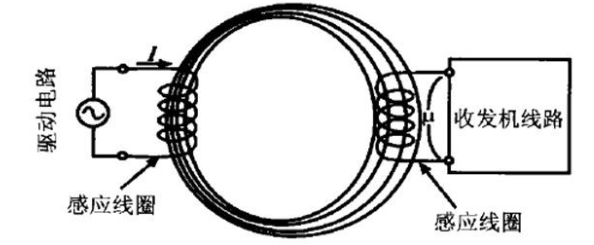
In relevant fields abroad, Michelin has embedded RFID sensors into non pneumatic tires, which can be used to collect data, predict vehicle performance, and adapt to different road conditions. Non pneumatic tires can replace the combination of pneumatic tires and wheels through their unique structure, allowing them to bear the load while providing good comfort and tire noise.
The first solution for autonomous driving is to replace subjective judgment by adjusting the adaptability of driving conditions. However, the adaptation of road conditions and the monitoring of the most basic tire parameters for autonomous driving, such as temperature, air pressure, speed, and path, are the prerequisites for autonomous driving. Firstly, with the arrival of autonomous vehicles, there will be a significant change in customer demand for tires, and the pursuit of driving pleasure will also be reduced. However, intelligent tires have good comfort and control tire noise. Therefore, intelligent tires need to be embedded with sensors to collect and absorb data, while automatically monitoring and adjusting the driving temperature of the tires, so that the car can maintain the optimal motion state in different situations. It also provides data information for the control system of the car users, predicts the performance of the car, and adapts to different road conditions. So, the future tire model may be an automatically adjustable non pneumatic tire hub integrated product structure.
The existing similar tires are explosion-proof tires with a scientific name of "flat tire". The tire walls of explosion-proof tires are relatively thick, which can support the weight of the vehicle. Even if the tire leaks, it will not immediately leak and cause the tire to lose control like non explosion-proof tires. Due to its thick inner structure of the tire wall, the vehicle can still drive for a period of time, which is enough to change a traffic accident in very dangerous situations. So explosion-proof tires are not non explosive, but rather a type of tire that can continue to drive within a certain range after a tire burst.
Non pneumatic tires refer to hollow tires that achieve shock absorption and cushioning performance without the use of air pressure. The internal structure is hollow, and there is a heat exchanger inside the tire to discharge the heat generated during tire operation at any time; Anti aging, low Rolling resistance, good elasticity, suitable for all kinds of medium speed vehicles. Non inflated tires are also one of the trends in the future development of the tire and automotive industry. Faced with the arrival of unmanned driving technology in the future, non inflated tires have unique advantages.
1. The safety is maximized, and traditional monitoring methods such as tire pressure monitoring can be directly eliminated.
2. The sensor is easier to combine with the non pneumatic tire, and can give the most direct information feedback to the road surface.
Analysis of the Unmanned Driving Market
In driverless driving, intelligent vehicles (ADAS) and the Vehicle-to-everything (V2X) can be said to meet the internal and external requirements of driverless driving. Intelligent vehicles refer to those equipped with advanced driving assistance systems (ADAS), which perceive the surrounding environment, analyze the vehicle's environment, and respond accordingly to environmental changes. Intelligent cars can be seen as a transition to autonomous vehicles and are also the main research and development direction for traditional car companies. Due to the fact that intelligent vehicles operate in a complex environment that includes factors such as vehicles, pedestrians, and facilities, achieving fully autonomous driving requires establishing information exchange between the vehicle and other factors in the driving environment, known as V2X. Autonomous driving can only be achieved if both internal and external requirements are met.
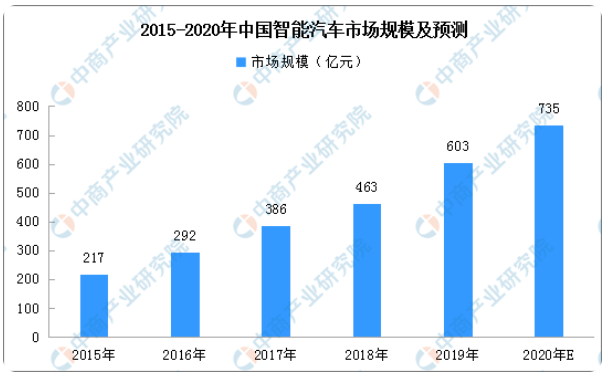
It is predicted that the size of China's intelligent vehicle market will be approximately 73.5 billion yuan in 2020. Among them, blind zone monitoring, fatigue warning, high and low beam assist, adaptive cruise and other links account for a large proportion in intelligent vehicles. In 2020, the growth rate of the smart car market was relatively low, mainly due to the slowdown of the Chinese automotive market due to multiple factors such as the pandemic.
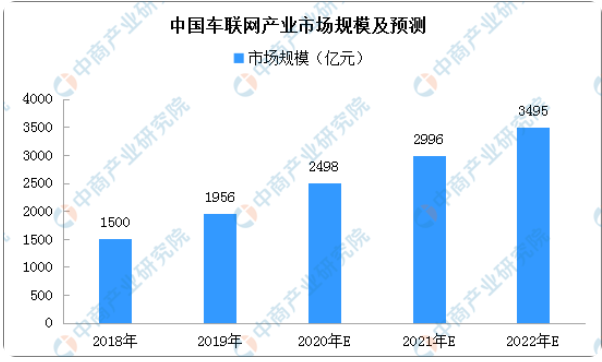
The Vehicle-to-everything is a new generation of information and communication technology, which is used to realize the all-round network connection inside the vehicle, between vehicles, between vehicles and roads, between vehicles and people, and between vehicles and service platforms, improve the level of automobile intelligence and automatic driving ability, and build a new business model of automobile and transportation services. In recent years, the domestic Vehicle-to-everything market has developed rapidly. The country has issued supporting policies and standards for many times to promote the development of the industry. For example, the Ministry of Industry and Information Technology has issued the Guidelines for the Construction of the National Vehicle-to-everything Industrial Standard System (General Requirements), the Guidelines for the Construction of the National Vehicle-to-everything Industrial Standard System (Information Communication), the Guidelines for the Construction of the National Vehicle-to-everything Industrial Standard System (Electronic Products and Services), etc., and the local authorities have constantly put forward guidance and planning. China's Vehicle-to-everything industry has broad prospects. In 2019, the market size of Vehicle-to-everything will exceed 190 billion yuan. With the further application of Vehicle-to-everything technology, China's Vehicle-to-everything market continues to expand.
The emergence of non pneumatic tires can achieve the perfect cooperation with intelligent vehicles. At present, the technology of intelligent vehicles is not particularly mature. Therefore, the fault tolerance rate of non pneumatic tires on the road is much higher than that of pneumatic tires, and safety is greatly guaranteed.